Can Horses Eat Oats? A Senior Horse Guide
Can horses eat oats? Yes, but oats are a starchy grain best limited, and a poor choice for PPID and EMS seniors. Why forage and senior feed usually win.
Yes, horses can eat oats, and they are a traditional, fairly digestible grain, but oats are still starchy and best limited, and they are a poor choice for senior horses with PPID, EMS, or insulin dysregulation. For most modern and older horses, a forage-first diet with a ration balancer or a complete senior feed beats feeding plain oats.
Oats earned their place feeding hardworking horses in an era of heavy farm and carriage work. Today, most horses do far less, and our understanding of equine metabolism has grown, so the role of grain has shrunk, especially for seniors.
Feed and Balancers for Senior Horses
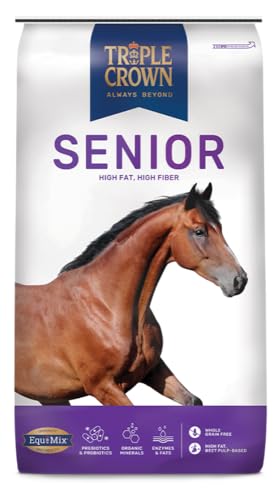
Triple Crown Triple Crown Senior Horse Feed
$54.49 on Amazon
High-fat, high-fiber soakable complete feed for older horses

Formula 707 Daily Essentials Ration Balancer
$26.43 on Amazon
Concentrated low-calorie vitamin and mineral pellet for forage diets

Manna Pro Weight Accelerator for Senior Horses
$36.99 on Amazon
High-calorie omega-3 and flaxseed topper to add condition to thin seniors
How Oats Fit a Horse's Diet
Oats are more digestible and lower in starch than corn, which is why they were the grain of choice for working horses. They provide energy in a fairly horse-friendly package. But energy from grain is only useful if a horse is actually working hard enough to need it. For a horse at light work, retirement, or simply maintaining weight on good forage, oats add starch the horse does not need.
How Much, If Any
If a hardworking horse genuinely needs extra energy, oats are fed by weight in modest amounts and split across meals to keep the starch load per feeding low. Feeding by the scoop rather than by weight is a common way owners accidentally overfeed grain. For most horses, forage plus a balancer covers the diet, and grain is unnecessary. Let body condition score and your vet guide the decision.
Risks to Watch For
- Starch and laminitis: oats raise insulin and laminitis risk in metabolic horses.
- Hindgut upset: a large grain meal can ferment in the hindgut and cause colic.
- Overfeeding by volume: measuring grain by scoop rather than weight leads to too much.
The Senior Horse Note
Older horses are usually better off without plain oats. PPID and EMS are common in seniors, and these horses need low-starch, low-sugar diets to keep laminitis at bay, which rules out grain. Even metabolically healthy seniors are better served by a complete senior feed that delivers balanced nutrition and is formulated for an aging body, rather than the unbalanced energy of oats.
Dental disease seals the case. A senior with worn teeth may not chew whole oats well, and a soakable senior feed or soaked balancer is far easier on the mouth while supplying the vitamins, minerals, and digestible fiber an old horse needs. If your senior needs to gain weight, a high-fat topper or senior feed adds condition more safely than grain.
The Bottom Line
Oats are not harmful to a healthy horse in modest, measured amounts, but they are a starchy grain that most modern and senior horses do not need, and a poor choice for metabolic horses. Build the diet around forage with a ration balancer or a complete senior feed, reserve grain for genuinely hard-working horses, and let your veterinarian guide a metabolic or aging horse's diet.
Senior Horse Care Planner
Track your senior horse's vital signs, feed and body condition, farrier and dental schedule, medications, and quality of life, all in one printable planner.
Frequently Asked Questions
Can horses eat oats?
Yes, horses can eat oats, and oats have long been a traditional horse grain. They are more digestible and lower in starch than corn, which is why they were a staple for working horses. But oats are still a starchy grain, so they are not ideal for every horse. For modern, lighter-worked, and senior horses, a forage-first diet with a balancer or senior feed usually beats feeding plain oats.
Are oats safe for horses with Cushing's or EMS?
Oats are starchy, and starch converts to sugar, so they are a poor choice for horses with PPID, EMS, or insulin dysregulation. Feeding grain like oats can spike insulin and raise laminitis risk in metabolic horses. These horses should be on a low-starch, low-sugar diet built around forage, with a ration balancer rather than grain. Always confirm a metabolic horse's diet with your vet.
How many oats should I feed a horse?
For most modern horses, the honest answer is little or none, with forage doing the heavy lifting. If a hardworking horse needs the extra energy, oats are fed by weight in modest, measured amounts, split across meals to limit the starch load per feeding. A horse at light work or retirement rarely needs grain at all. Let body condition and your vet guide whether grain is warranted.
Are oats good for senior horses?
Most senior horses are better served by a complete senior feed or a forage-first diet with a balancer than by plain oats. Oats are starchy, do not address the dental and metabolic issues common in older horses, and lack the balanced vitamins and minerals a senior needs. A soakable senior feed is easier on worn teeth and built for an aging horse's needs, which makes it the smarter choice.
Should oats be whole, rolled, or crimped for horses?
Processed oats, such as rolled or crimped, are slightly more digestible than whole oats because the hull is broken, which can help horses with poor teeth extract more from them. Whole oats are still digestible for horses with good teeth. For a senior with dental disease, though, a soaked senior feed or soaked balancer is usually a better answer than any form of oats.
Can too many oats cause colic or laminitis?
Yes. A large grain meal, including oats, sends excess starch to the hindgut, where it can ferment, disrupt the gut, and trigger colic or laminitis. This is why grain should be fed in small, measured amounts by weight if at all, and why metabolic horses should avoid it. If a horse breaks into a grain bin and gorges, treat it as an emergency and call your vet.
Need more help with your senior horse?
Browse our guides by topic to find practical solutions.
Wellness Planner: $39