Can Horses Eat Apples? A Senior Horse Guide
Can horses eat apples? Yes, in moderation, but sugar makes them risky for PPID and EMS seniors. How to feed apples safely, how much, and lower-sugar treat options.
Yes, most healthy horses can eat apples as an occasional treat, but apples are high in sugar, so they are a poor choice for senior horses with PPID (Cushing's), EMS, or insulin dysregulation. For a metabolically healthy older horse, one or two apples a day, cut into pieces, is plenty. For a horse with a metabolic condition or a history of laminitis, the safer choice is to skip apples and reach for a low-sugar treat instead.
Apples are the classic horse treat for good reason: horses love them, and they are cheap and easy. But the same sweetness that horses crave is exactly what makes apples a treat to ration carefully, especially as your horse ages and the odds of a metabolic problem climb.
Treats and Feed for Senior Horses

Manna Pro Low-Sugar Apple Snax Treats
$13.76 on Amazon
No added sugar or molasses, low-starch, made for metabolic horses

Formula 707 Daily Essentials Ration Balancer
$26.43 on Amazon
Concentrated low-calorie vitamin and mineral pellet for forage diets
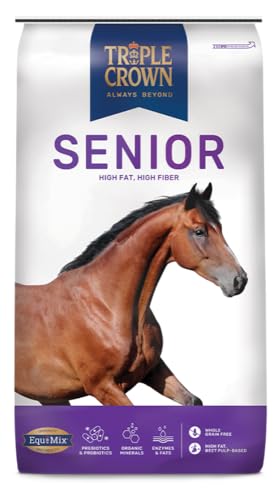
Triple Crown Triple Crown Senior Horse Feed
$54.49 on Amazon
High-fat, high-fiber soakable complete feed for older horses
How to Feed Apples to a Horse
If your horse is cleared for apples, preparation matters more than most owners realize. Cut each apple into several pieces rather than handing over a whole fruit. A whole apple can be bolted and lodge in the esophagus, causing choke, and the risk is higher in older horses with compromised teeth. Smaller pieces also slow a greedy eater and make a single apple stretch across a few rewards.
Feed apples by hand with a flat palm or drop them in a feed tub, and offer them as a clear extra rather than mixing large amounts into a meal. Wash store-bought apples to remove residues, and never feed apples that are moldy, fermenting, or rotting, since spoiled fruit can cause digestive upset.
How Much Is Safe
Treats should make up only a small fraction of the daily diet, which is built around forage. For an average healthy horse, one or two apples a day is a sensible ceiling. The trouble starts when apples stop being a treat and become a habit, or when a horse breaks into a bin or grazes under a fruit tree and gorges. A sudden large load of sugary fruit can trigger colic or, in a susceptible horse, laminitis.
Risks to Watch For
- Choke: whole apples or large chunks can lodge in the esophagus, especially in seniors with poor teeth.
- Sugar and laminitis: apples are sugary, and excess sugar raises insulin and laminitis risk in metabolic horses.
- Colic: gorging on windfall apples can overwhelm the hindgut.
- Spoiled fruit: moldy or fermenting apples can cause digestive upset.
The Senior Horse Note
Two age-related issues change how you should think about apples. First, metabolic disease is common in older horses. PPID and EMS both involve insulin dysregulation, and for those horses sugary treats like apples are a real laminitis risk, not just empty calories. If your senior has been diagnosed, or simply has not been tested, the cautious default is to skip apples and use a low-sugar treat made for metabolic horses.
Second, dental disease is the rule rather than the exception in old horses. A worn or missing set of teeth cannot grind a firm apple well, and a horse that bolts chunks it cannot chew is a prime candidate for choke. If your horse quids, drops feed, or struggles with firm treats, grate the apple, cut it very small, or switch to a soft easy-chew option, and book a dental exam.
Better Alternatives for Metabolic Seniors
If apples are off the table, you do not have to stop treating your horse. Commercial low-sugar, low-starch treats let you reward an old friend without spiking insulin, and soft formulas suit worn teeth. A handful of hay pellets or a few pieces of a low-sugar treat scratch the same itch as an apple with far less metabolic cost. Build the diet around forage, balance it with a ration balancer, and keep treats small.
Safer Treat Quick Links
- Manna Pro Low-Sugar Apple Snax - apple flavor without the sugar load
- Browse low-sugar horse treats on Amazon
The Bottom Line
Apples are safe for most healthy horses in small, cut-up amounts, but they are a sugary treat best limited for any senior, and best avoided for horses with PPID, EMS, or laminitis. Cut them small to prevent choke, never let a horse gorge, and lean on low-sugar treats for metabolic seniors. As always, let your veterinarian guide what fits your individual horse's health.
Senior Horse Care Planner
Track your senior horse's vital signs, feed and body condition, farrier and dental schedule, medications, and quality of life, all in one printable planner.
Frequently Asked Questions
Can horses eat apples safely?
Yes, most healthy horses can eat apples in small amounts as an occasional treat. The key is moderation and preparation. Cut apples into smaller slices to reduce the risk of choke, and never feed a whole apple to a horse that bolts its food. One or two apples a day is plenty for an average horse, and far less for a senior with metabolic disease. Always remove apples from the diet if your vet has flagged sugar concerns.
Are apples bad for horses with Cushing's or EMS?
Apples are high in sugar, so they are a poor choice for horses with PPID (Cushing's), EMS, or insulin dysregulation. The sugar can spike insulin and raise laminitis risk in these horses. If your senior horse has a metabolic condition, skip apples or limit them to a tiny taste, and reach for a low-sugar commercial treat instead. When in doubt, ask your vet what fits your horse's metabolic plan.
How many apples can I give my senior horse?
For a metabolically healthy senior, one or two apples a day, cut into pieces, is a reasonable ceiling. For a horse with PPID, EMS, or a history of laminitis, the safer answer is none or a tiny taste. Apples are treats, not nutrition, so the calories and sugar add up faster than owners expect. Keep treats to a small fraction of the daily diet and build meals around forage.
Can horses eat apple seeds and cores?
Apple cores are generally fine in small amounts, and the few seeds in an apple are not a realistic poisoning risk for a horse. The bigger concern is choke. A whole core can be gulped and lodge in the esophagus, especially in a senior with poor teeth. Cut apples and cores into smaller pieces, and avoid feeding large quantities of seeds, which contain trace cyanogenic compounds that only matter in bulk.
Should I feed apples to a horse with bad teeth?
A senior with worn or missing teeth can struggle to chew a firm apple and may bolt large chunks, raising the risk of choke. If your horse has dental disease, grate the apple, cut it into very small pieces, or skip it in favor of a soft, easy-chew treat. Watch any horse that quids or drops feed, since difficulty chewing apples is also a sign it is time for a dental exam.
Can apples cause colic in horses?
Large quantities of apples can contribute to colic and digestive upset, particularly if a horse gets into a bin or a fallen-fruit tree and gorges. The sudden load of sugar and fiber can disrupt the hindgut. Keep apples to small, measured treats, store them out of reach, and fence horses away from orchard windfalls. If your horse overeats apples and shows colic signs, call your vet promptly.
Need more help with your senior horse?
Browse our guides by topic to find practical solutions.
Wellness Planner: $39